
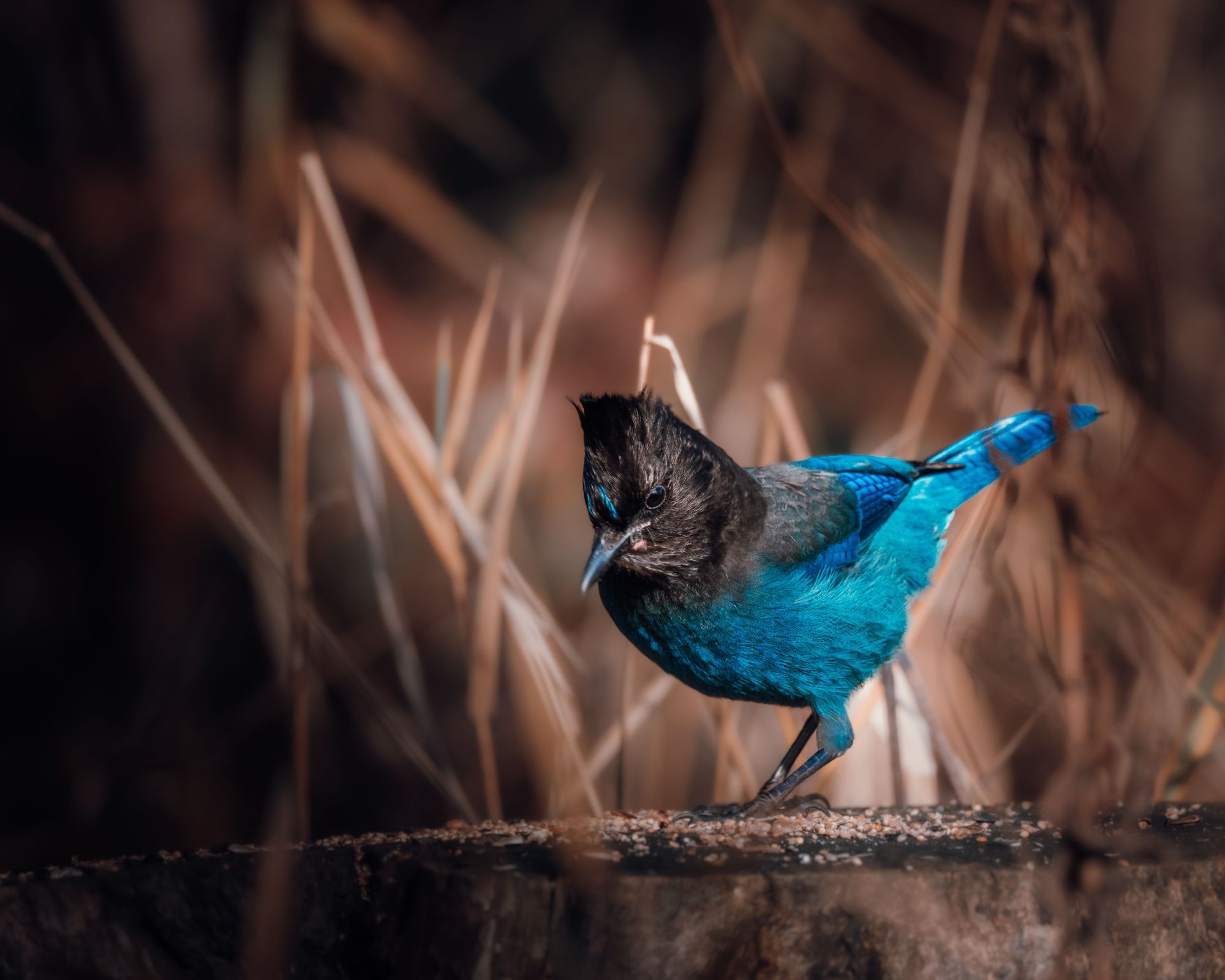
Big Bear Valley is home to more than 250 species of birds, both resident and migratory, thanks to its forests, meadows, wetlands, and the lake itself. And because the area sits along the Pacific Flyway, birding changes with the seasons. Some songbirds are reliable year-round residents, while others arrive for spring and summer, pass through during migration, or move to lower elevations when winter arrives.
Here’s a look at some of the songbirds you’re most likely to encounter around Big Bear Lake—whether you’re watching from your backyard or heading out into nature.
Mountain Chickadee: A Big Bear Backyard Favorite
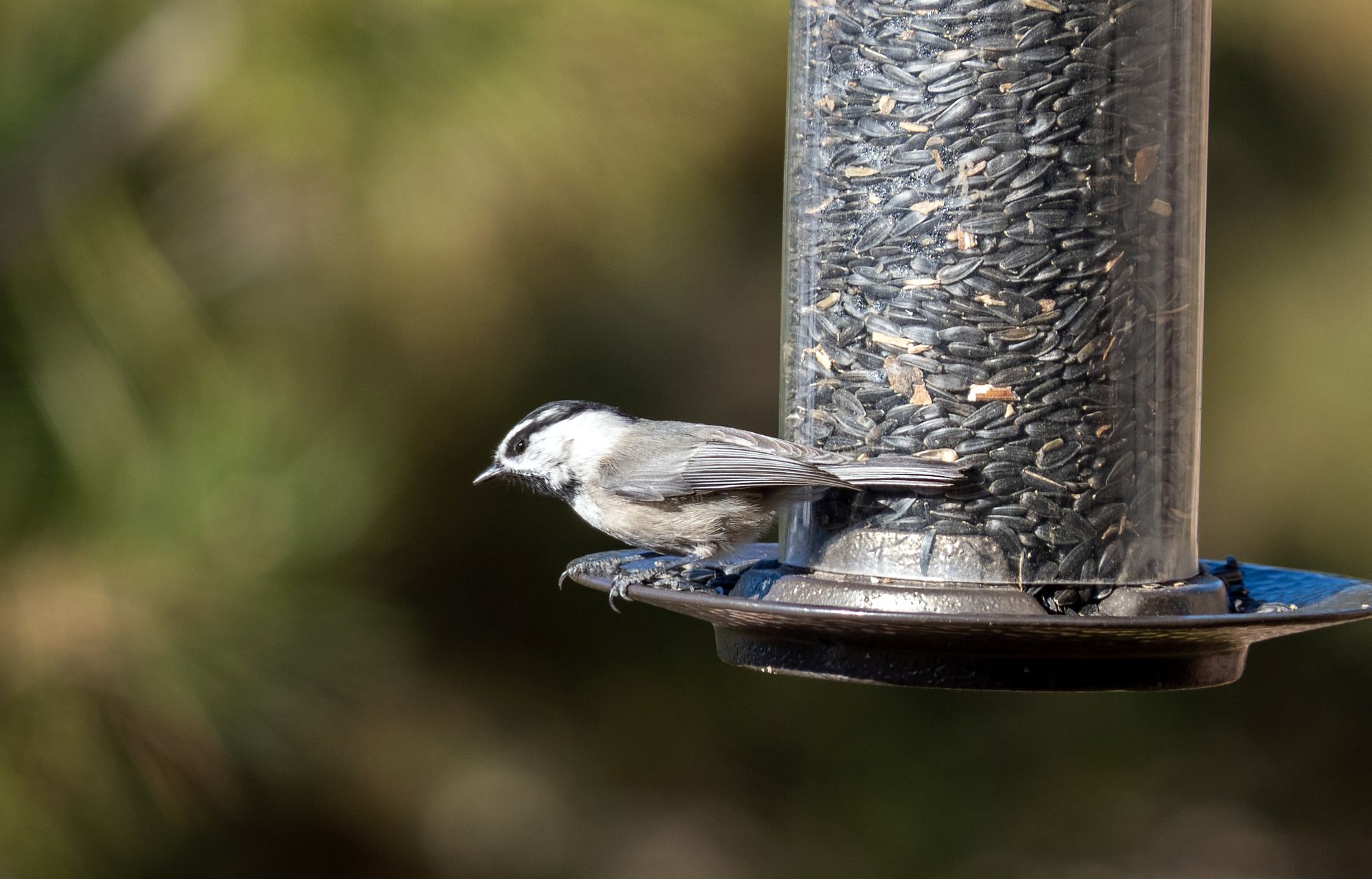
The Mountain Chickadee is practically synonymous with mountain birding. These small gray-and-white birds have a distinctive white eyebrow and an energetic personality to match. Listen for their familiar calls as they move through the pine trees.
Mountain Chickadees are year-round residents in the Big Bear area, although some move to lower elevations during winter. They’re frequent visitors to feeders throughout the year and especially appreciate sunflower seeds and other high-energy foods.
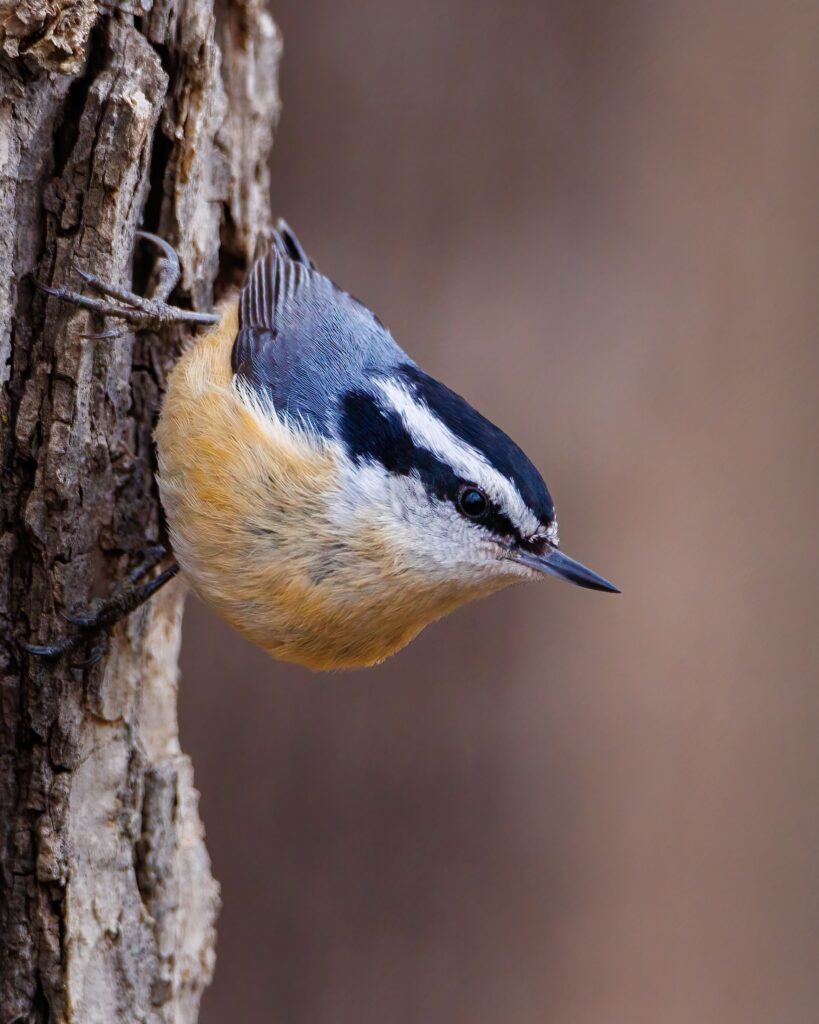
White-breasted Nuthatch: Look for the Upside-Down Bird
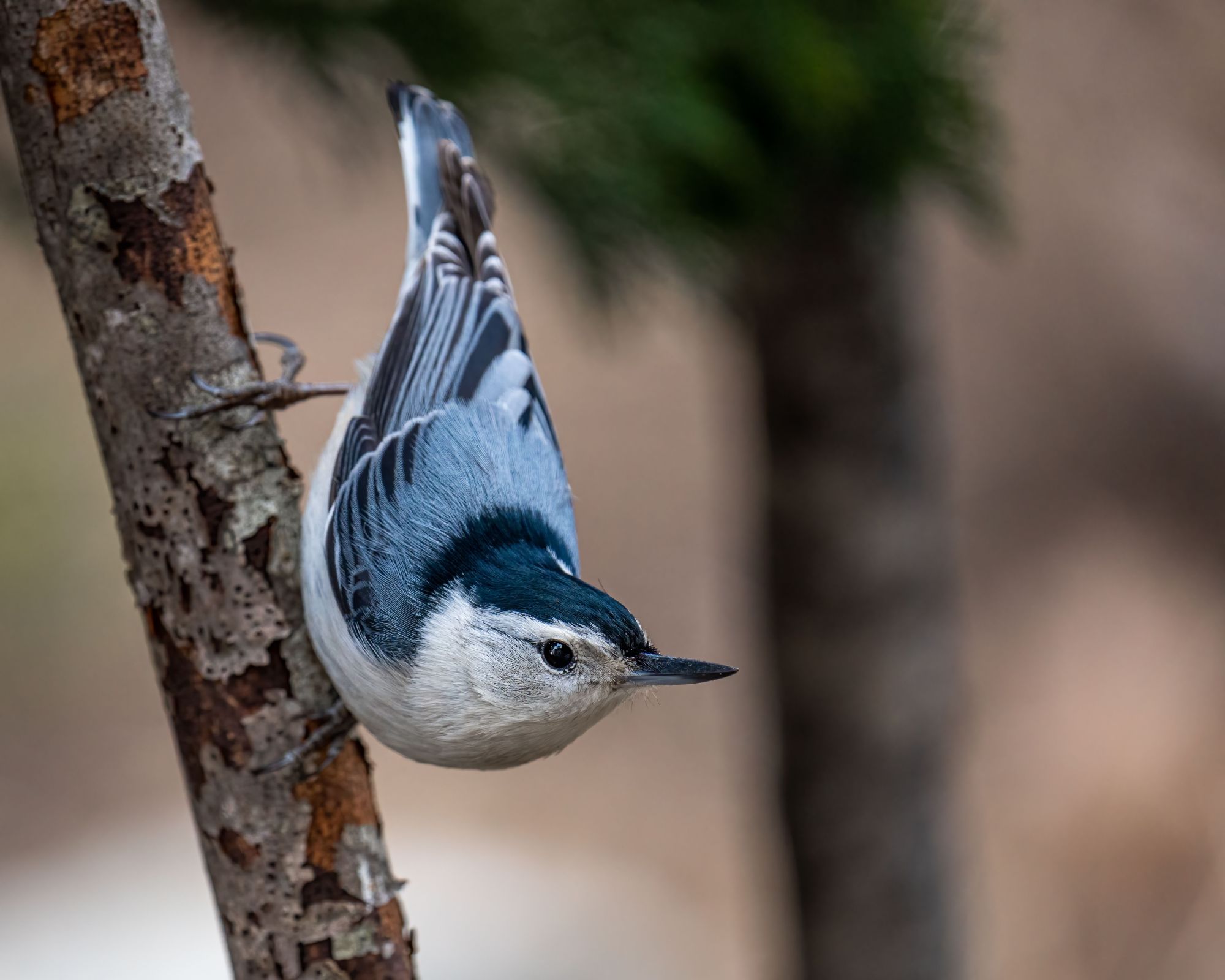
If you see a small bird creeping headfirst down a tree trunk, take a closer look. It may be a White-breasted Nuthatch.
These compact songbirds are expert climbers, moving along trunks and branches in ways that seem to defy gravity. They’re common feeder birds and enjoy sunflower seeds, peanuts, and suet. You can see them throughout the year here.
Steller’s Jay: The Blue-and-Black Mountain Showoff
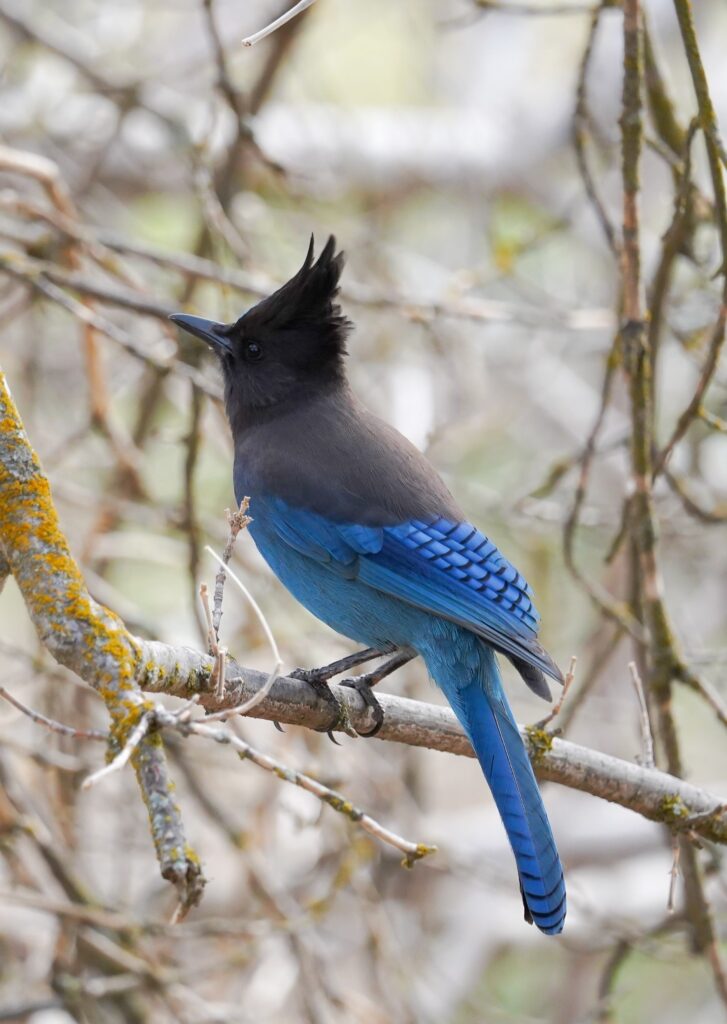
You don’t have to be an expert birder to recognize a Steller’s Jay. With its deep blue body, black crest, and bold personality, this is one of Big Bear’s most conspicuous songbirds.
Steller’s Jays are residents of the mountain forests, although birds breeding at higher elevations may move lower in winter. They’re regular visitors around feeders, picnic areas, campgrounds, and backyards. Offer peanuts or larger seeds and you may find yourself with a very enthusiastic audience.
Western Bluebird: A Welcome Sign of Spring
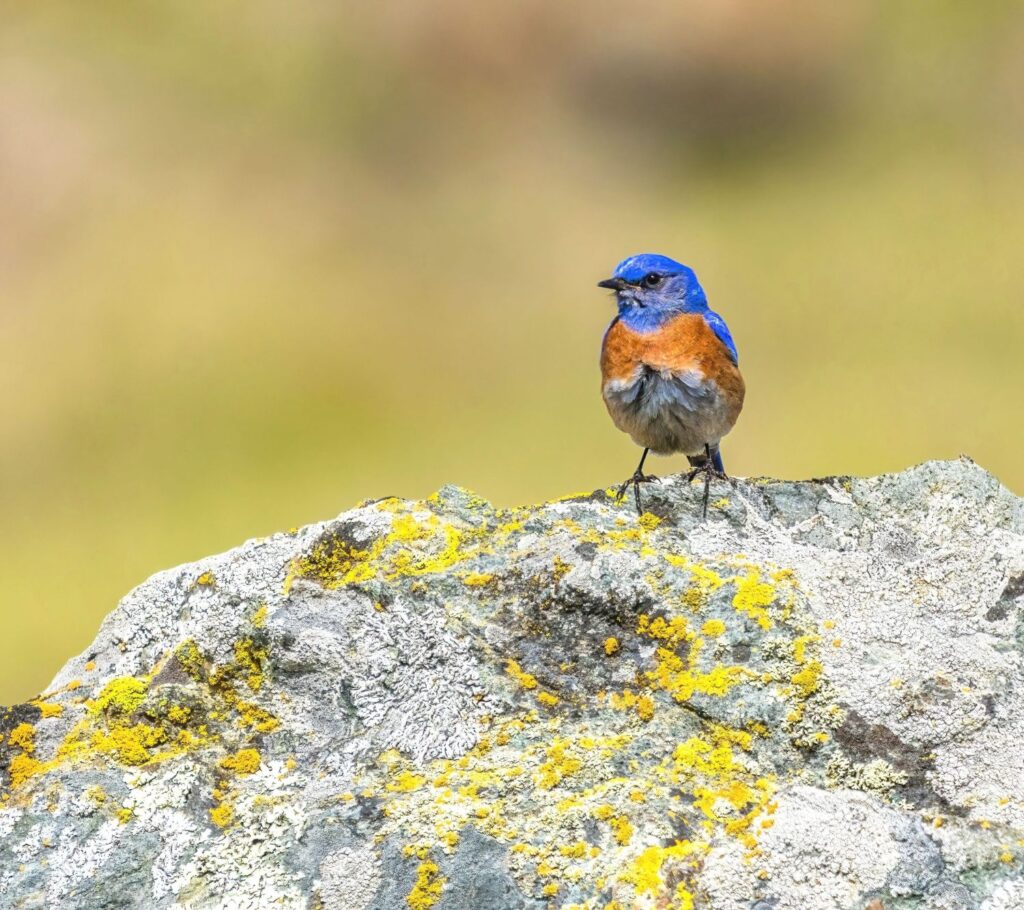
Few birds announce spring quite like a bluebird. In Big Bear Lake, both Western and Mountain Bluebirds can be found, but Western Bluebirds are especially familiar around open woodlands and meadow edges.
Western Bluebirds are often seen in Big Bear during the warmer months, when they breed and raise their young. Unlike many feeder birds, they’re primarily insect eaters during summer, so mealworms can be more useful than a traditional seed mix.
Look for them perched on fence posts, low branches, nest boxes, and other open perches before they drop suddenly to the ground after an insect.
Black-headed Grosbeak: Listen for the Song
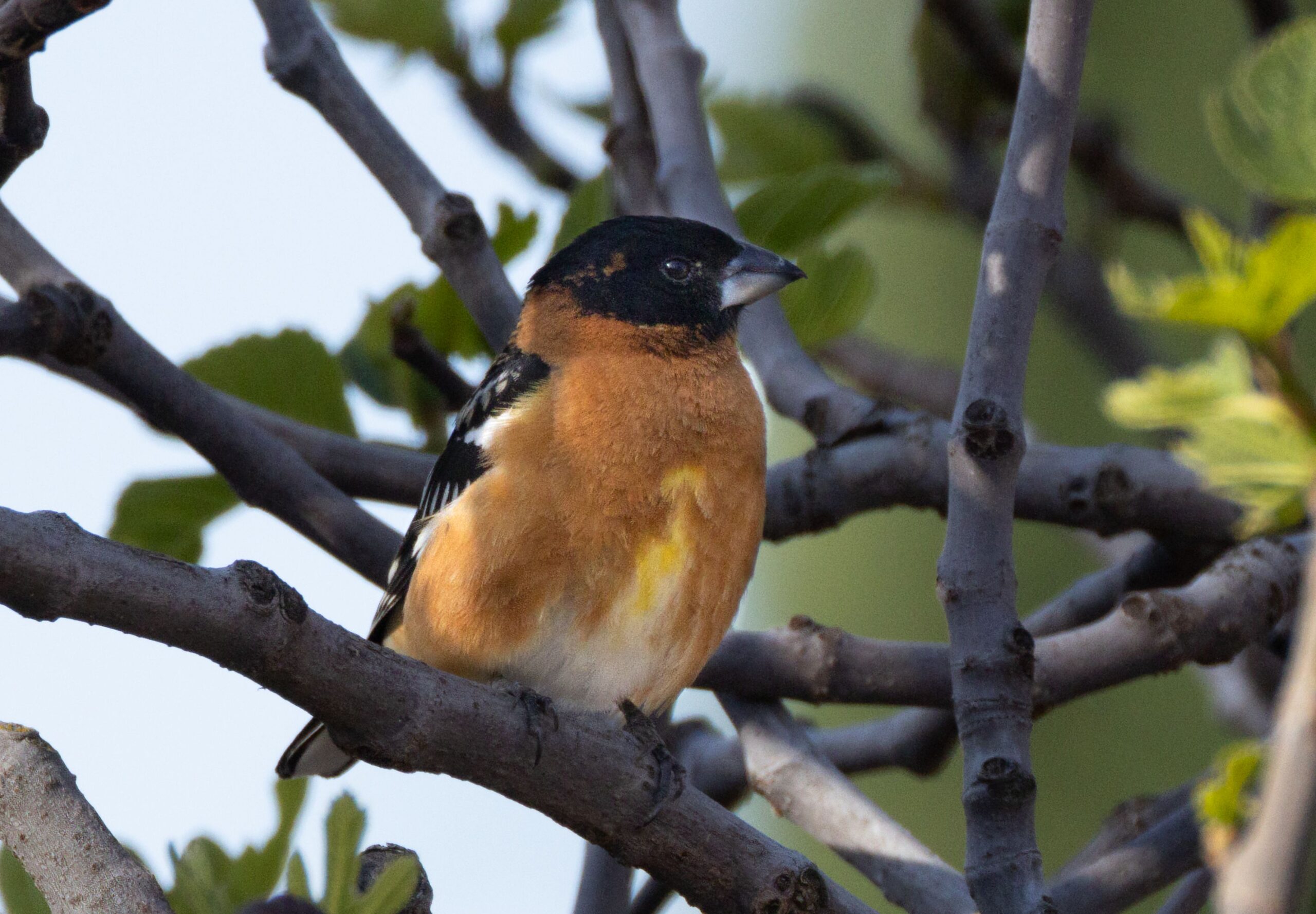
The Black-headed Grosbeak is one of those birds you hear before you ever see it. Its rich, musical song drifts down from the treetops during the warmer months, making it a wonderful companion on a Big Bear hike.
These chunky orange, black, and white songbirds arrive in spring and are generally seen through summer before heading south for the winter. They eat insects, berries, and seeds, and they’re especially fond of sunflower seeds at bird feeders.
Dark-eyed Junco: The Winter Regular
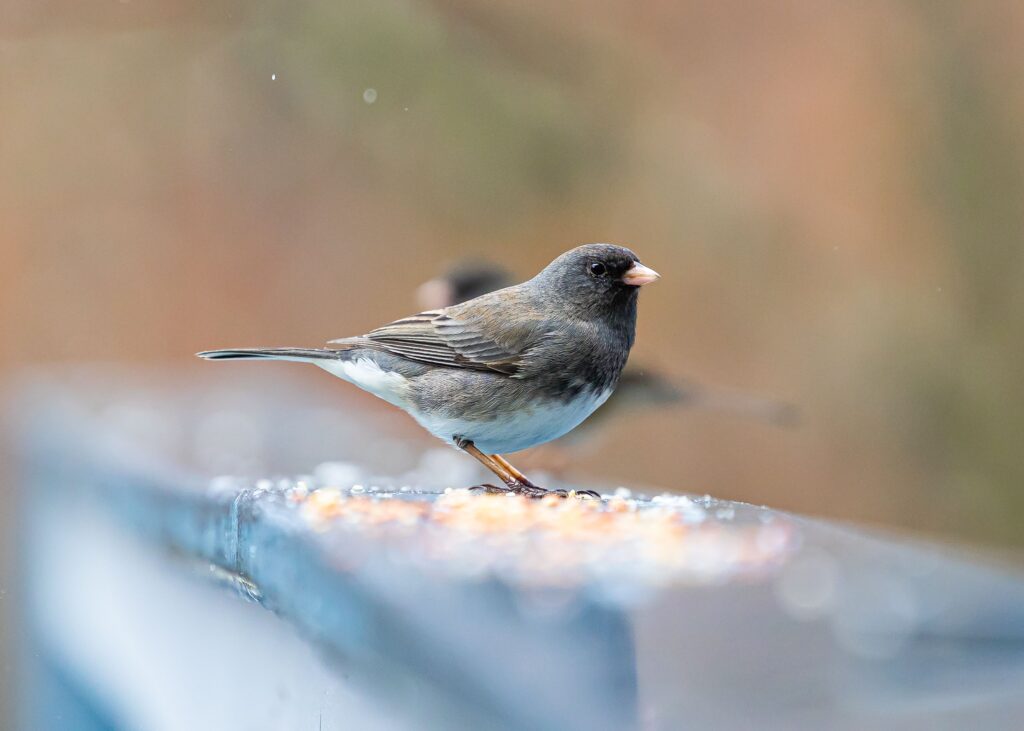
When snow arrives in Big Bear, Dark-eyed Juncos become particularly easy to spot. These small sparrows often forage on the ground beneath feeders, searching for fallen seed.
Juncos are commonly associated with winter, but in mountain regions they can remain year-round or move to different elevations as conditions change. In Big Bear, winter is an especially good time to watch for them around yards, woodland edges, and trails.
Cassin’s Finch: A True Mountain Finch
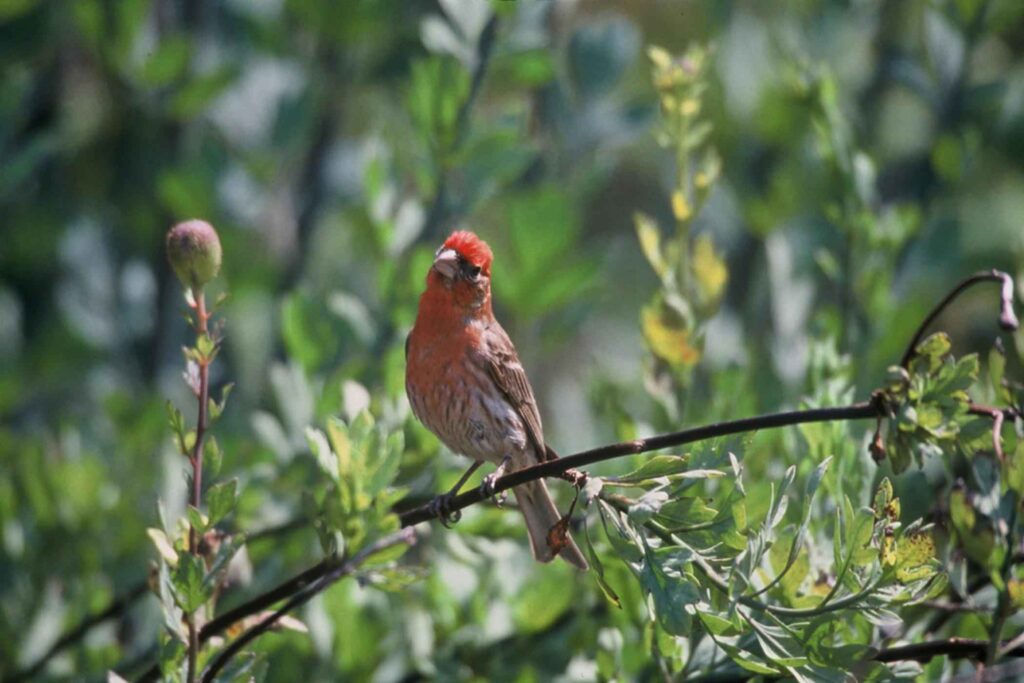
The rosy-red Cassin’s Finch is another joyful Big Bear sighting. Males have a rosy crown and pinkish-red coloring, while females and young birds are streaked brown and white.
These finches live in evergreen mountain forests and may visit feeders filled with sunflower seeds, particularly in winter. Some remain in the mountains year-round, while others move to lower elevations or farther south depending on food availability and weather.
If you see a flock of finches moving through the pines, stop and look closely. You just might discover a Cassin’s Finch among them.
Download Chirp’s Wild Bird Checklist for a complete list of songbirds found in the Big Bear Valley.
How to Support Big Bear’s Songbirds
One of the best ways to enjoy Big Bear’s songbirds is to make your yard a welcoming place for them. Offer one or more bird feeders, and regularly clean them, discarding spoiled seed when necessary. Be sure to clean up spilled seed, seed hulls, and droppings beneath feeders so you don’t attract pests. And space multiple feeders apart to help reduce crowding and disease transmission.
Planting native, bird-friendly plants provides natural food, cover, and nesting habitat while using less water and generally requiring fewer chemical inputs. Leaving some natural vegetation and dead branches can also give birds the resources they need.
Finally, make your windows bird-safe. Feeders should be placed either very close to a window—within about three feet—or well away from it, and window treatments or exterior decals can help reduce collisions.
Go Birdwatching in Big Bear Lake
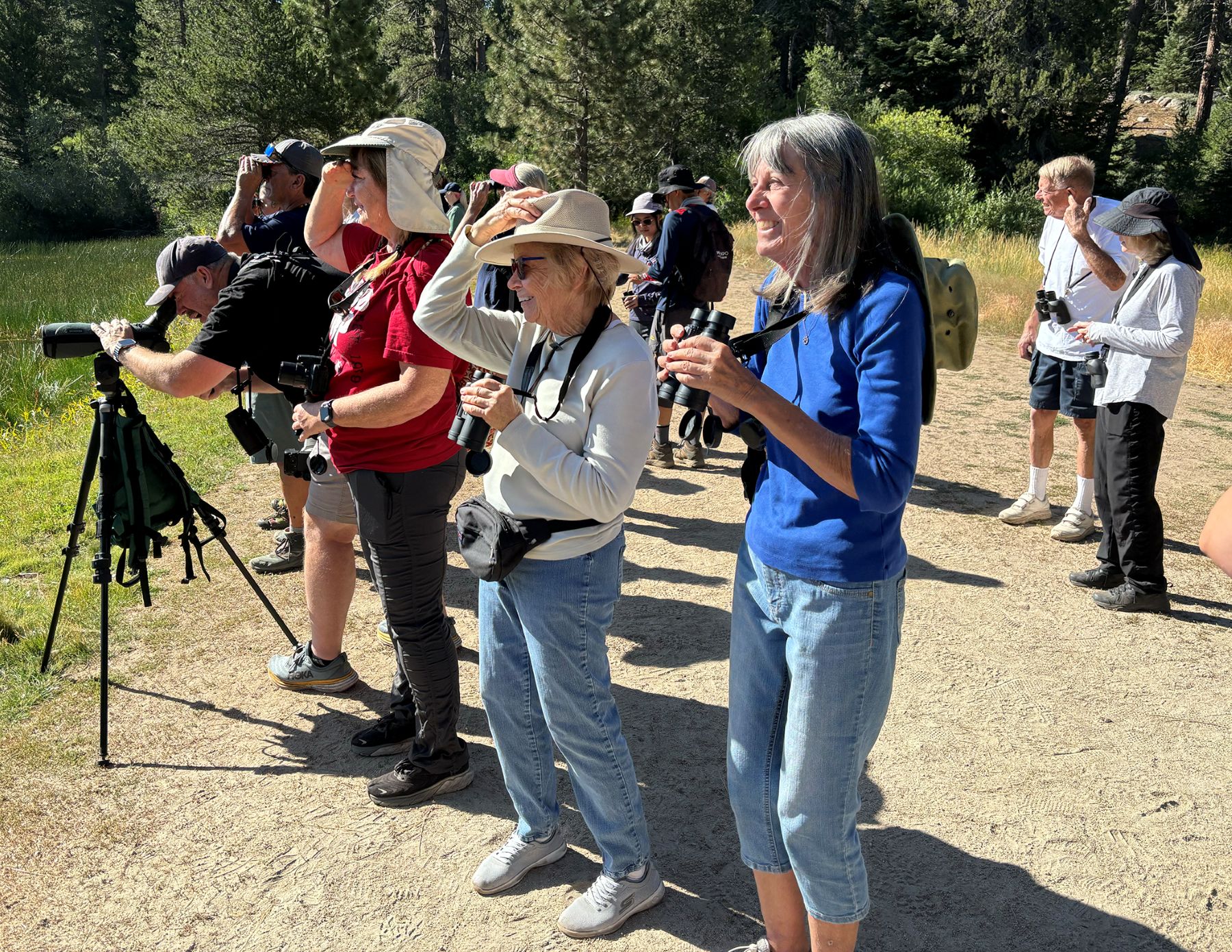
The wonderful thing about birdwatching in Big Bear is that you don’t have to go far. Your own backyard may bring you chickadees, nuthatches, finches, juncos, and jays. Head out to a forest trail, meadow, marsh, or lakeshore, and you’ll find an entirely different cast of characters.
So grab your binoculars, slow down, and listen. Whether you’re a lifelong birder or simply someone who loves seeing a little wildness outside the window, Big Bear’s songbirds are always worth watching.
Need some bird seed or birdwatching gear? Stop by the Chirp store for supplies!