
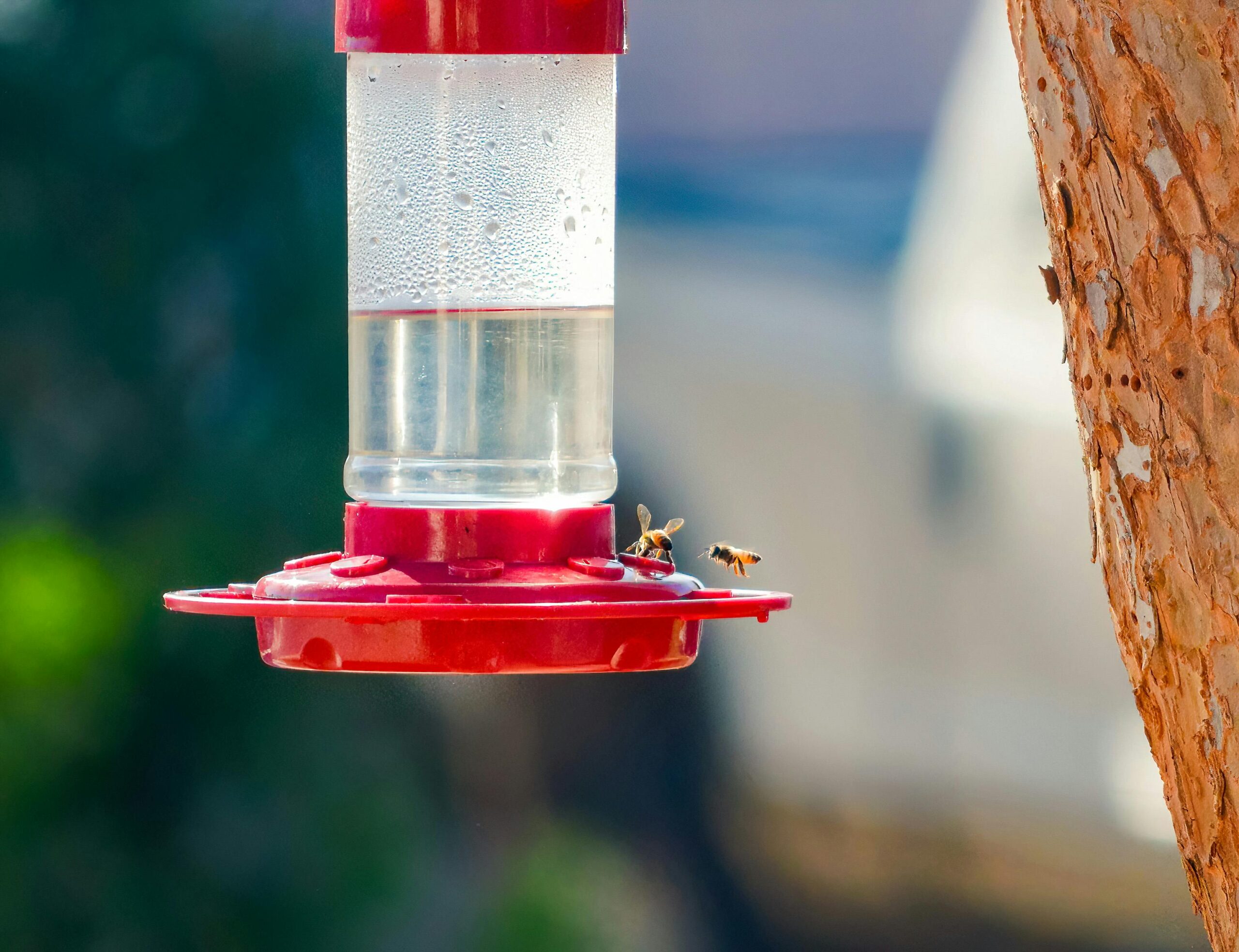
Summer at Big Bear Lake brings a flurry of activity to hummingbird feeders. You can see a variety of hummers at your feeders, from Anna’s Hummingbirds to Rufous Hummingbirds, which may still be passing through for spring migration. But if you’ve ever filled a hummingbird feeder only to find it swarmed by bees and wasps a few days later, you’re not alone. It’s one of the most common challenges backyard bird lovers face, especially during the warm summer months.
Thankfully, you don’t have to choose between supporting hummingbirds and protecting other important pollinators. With a few simple adjustments, you can reduce bee and wasp activity around your feeders while continuing to provide a safe, reliable food source for hummingbirds.
Why Bees and Wasps Are Attracted to Hummingbird Feeders
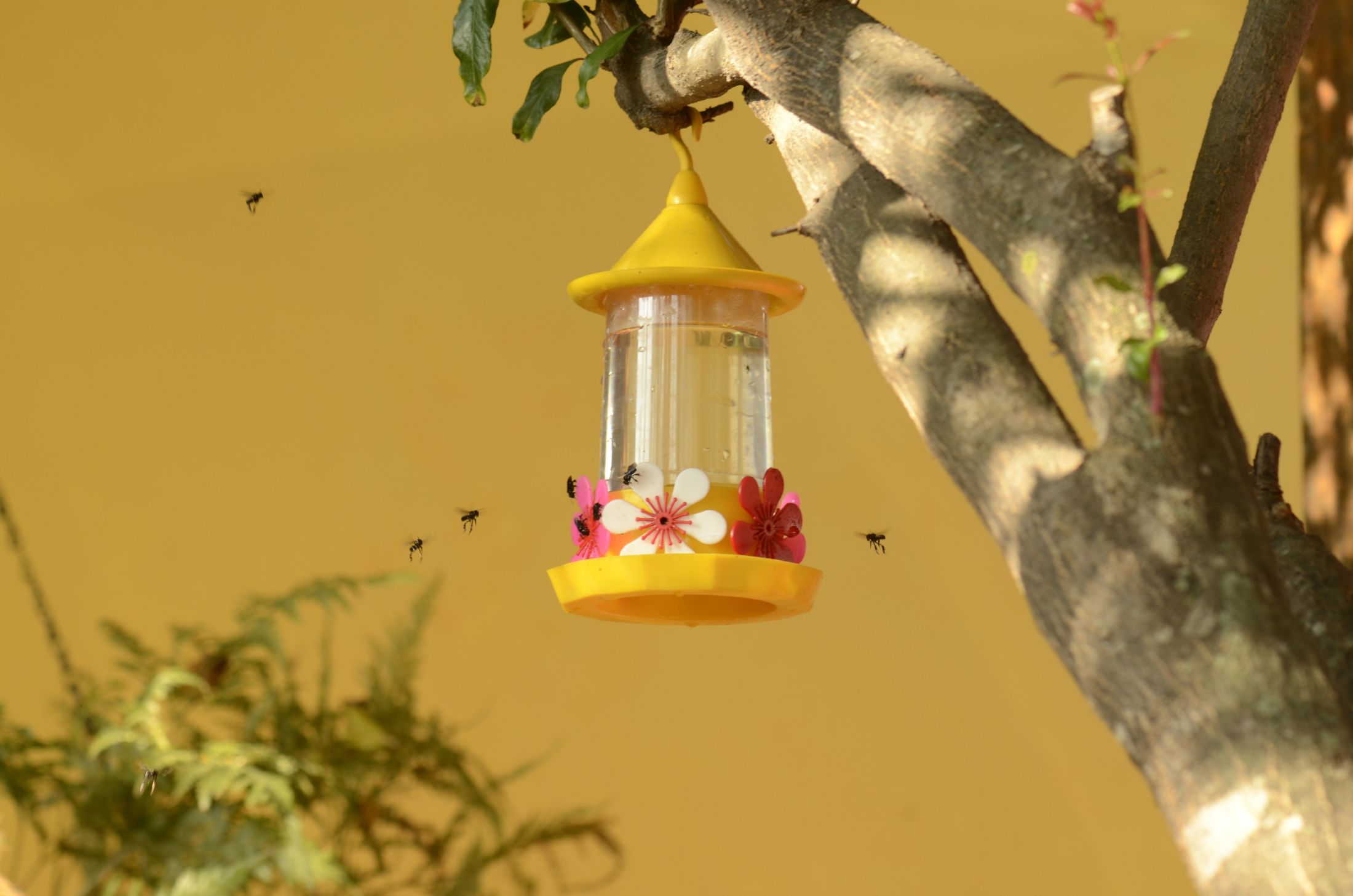
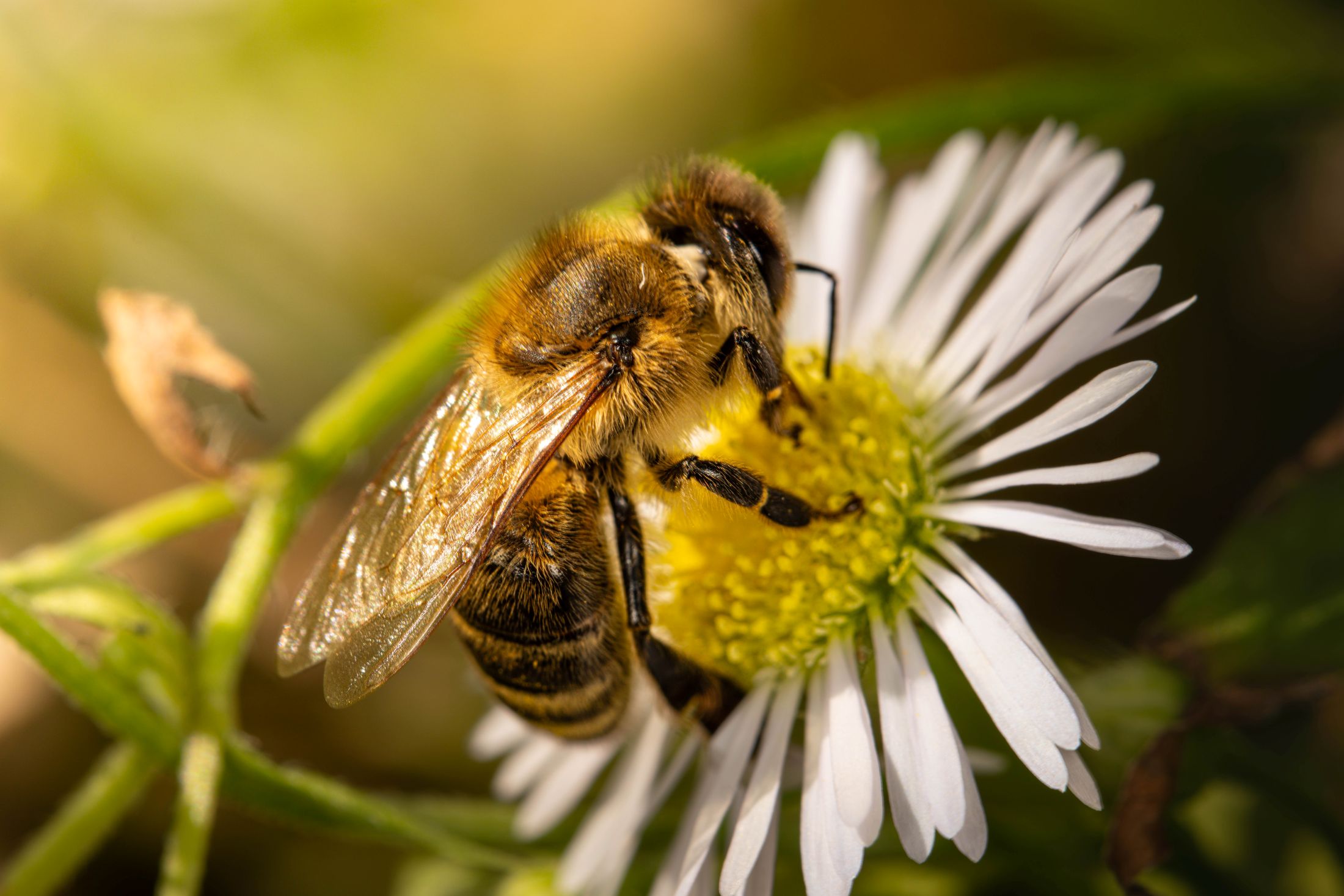
Hummingbirds aren’t the only creatures that love nectar. Bees and wasps naturally seek out sweet food sources, particularly during hot, dry seasons, when flowers may be less abundant.
In mountain communities like Big Bear Lake, feeder activity often increases during summer as temperatures rise and natural water sources become scarcer. A hummingbird feeder can quickly become an easy meal for insects if nectar leaks, drips, or accumulates on the outside of the feeder. Fortunately, most bee and wasp problems can be traced back to a few common issues, many of which are easy to fix.
Keep Hummingbird Feeders Clean and Leak-Free
If there’s one thing hummingbird experts consistently recommend, it’s cleanliness. Even a small amount of spilled nectar from your hummingbird feeder can attract insects from long distances.
Wipe down the outside of your feeder every time you refill it and clean the entire feeder thoroughly at least once a week. During periods of extreme heat, more frequent cleaning may be necessary. A clean feeder benefits hummingbirds, too. Fresh nectar helps prevent mold, fermentation, and harmful bacterial growth.
You should also regularly inspect your feeder for cracks, worn seals, or loose components that allow nectar to drip. If your feeder sways in the wind, nectar may slosh out through feeding ports and create sticky residue that attracts insects.
Choose a Bee-Resistant Hummingbird Feeder
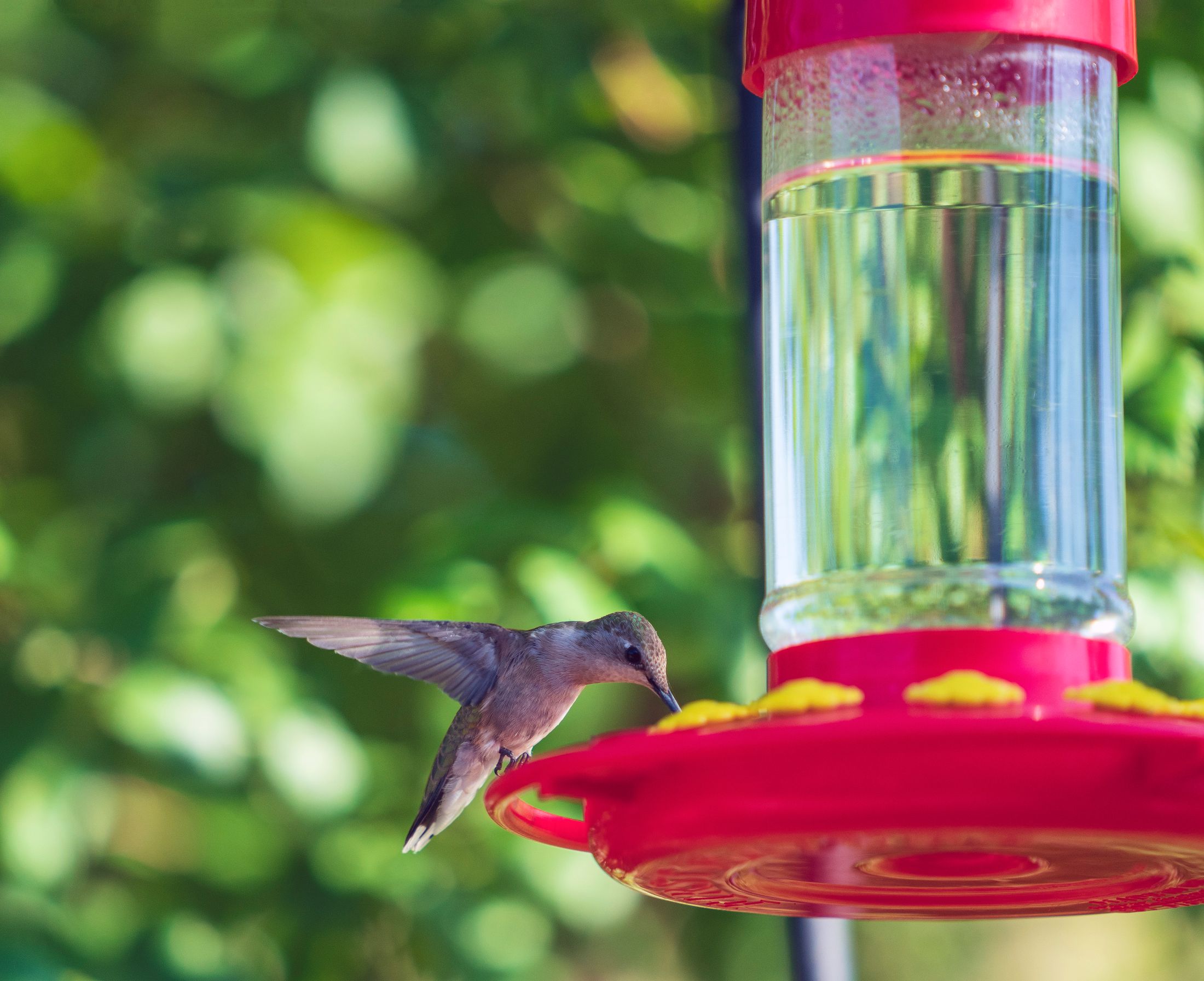
Not all hummingbird feeders are created equal. Many newer hummingbird feeder designs include built-in bee guards—small mesh or plastic barriers that allow a hummingbird’s long bill to reach the nectar while preventing bees from accessing it.
Saucer-style feeders are often particularly effective because the nectar reservoir sits below the feeding ports, making it more difficult for insects to reach the sugar water. Feeders with small feeding ports and minimal exposed nectar can also help reduce insect activity.
Visit the Chirp store to browse bee-resistant hummingbird feeders.
Avoid the Color Yellow Near Feeders
Hummingbirds are strongly attracted to the color red, but bees are drawn to colors such as yellow, blue, and purple. Many hummingbird feeders include decorative yellow flowers around feeding ports. While these decorations may look appealing to people, they can unintentionally attract bees.
If your feeder has removable yellow flower inserts, consider replacing them with red components if available. Likewise, avoid hanging feeders directly next to large patches of bright yellow flowers that may attract bees.
Move Hummingbird Feeders into the Shade
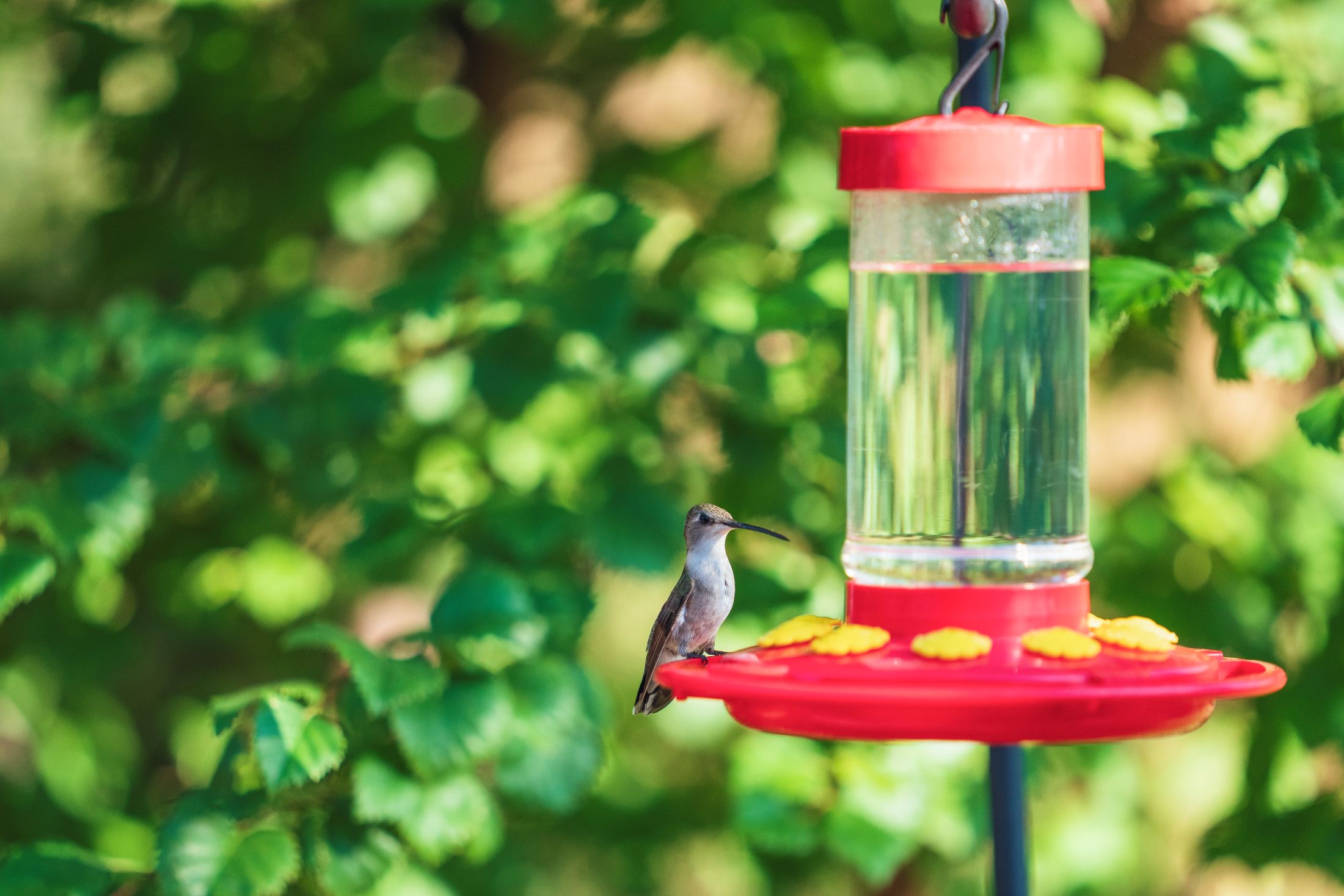
When it comes to hanging your hummingbird feeder, location matters more than many people realize. Placing feeders in partial shade helps keep nectar cooler and slows spoilage. It can also reduce insect activity: bees and wasps are often more active in sunny, exposed areas. Moving a feeder just a few feet into a shadier location may significantly reduce the number of insects visiting it.
For residents of Big Bear Lake, where summer afternoons can be warm and sunny despite the mountain elevation, a sheltered location near shrubs or small trees often offers an ideal balance. Hummingbirds appreciate nearby perches, and the shade helps maintain nectar freshness.
Use the Correct Nectar Recipe
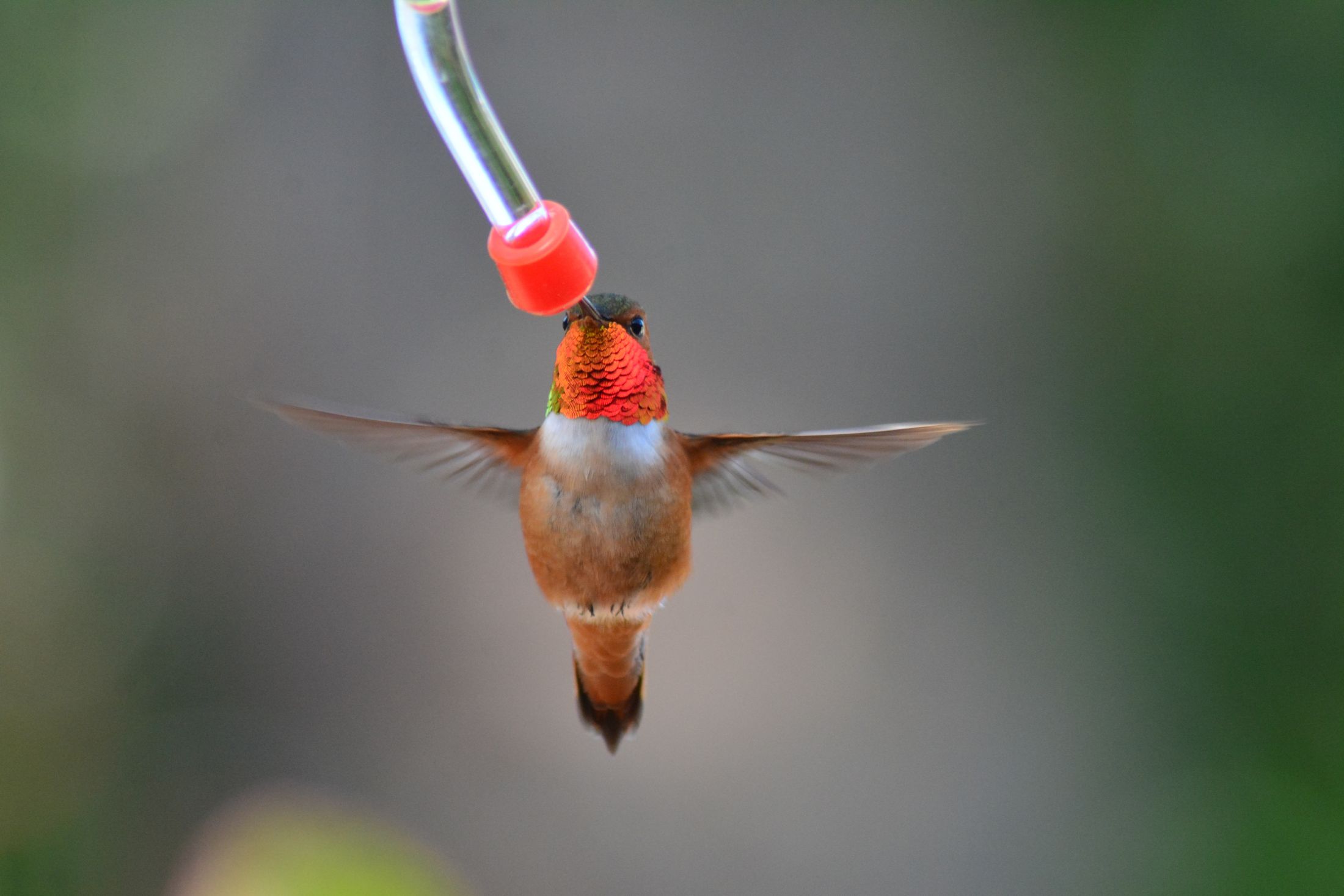
It can be tempting to make nectar sweeter in hopes of attracting more hummingbirds, but that’s not recommended.
The standard recipe remains:
- 1 part plain white sugar
- 4 parts water
Using the proper 1:4 ratio provides a nectar concentration similar to many natural flowers. Avoid honey, brown sugar, artificial sweeteners, molasses, or red food coloring, which may be harmful to the hummingbirds and insects.
Plant Native Flowers for Both Hummingbirds and Pollinators
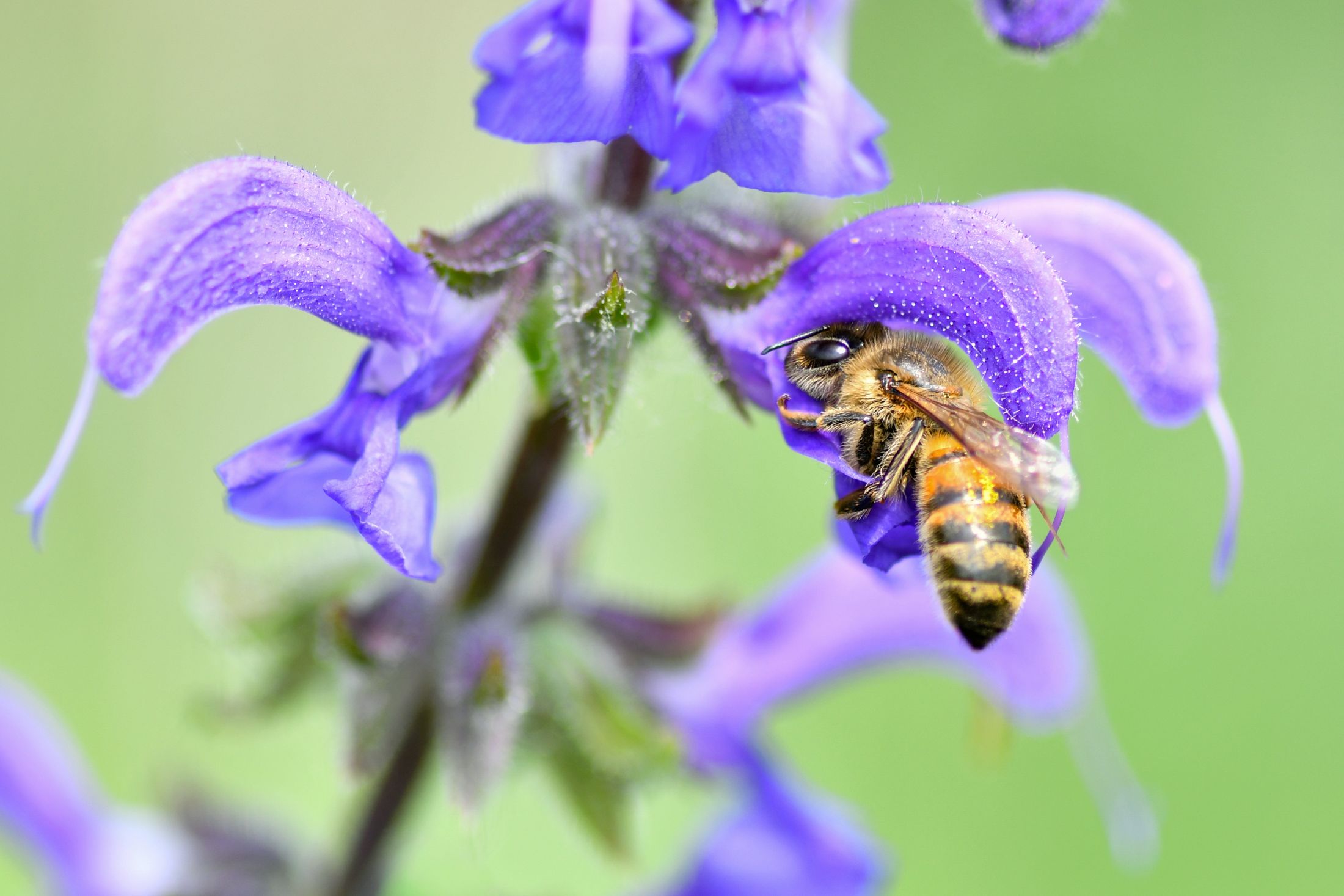
One of the most sustainable solutions for this issue is also one of the most beautiful. Instead of relying solely on feeders as a supplemental food source for local pollinators, create a habitat that provides natural nectar sources. Native flowering plants support hummingbirds, bees, butterflies, and other beneficial wildlife while reducing competition around feeders.
In Southern California mountain and foothill environments, consider incorporating native salvias, penstemons, monkeyflowers, and other nectar-rich plants that bloom throughout the growing season. By expanding natural food sources, you’re helping distribute wildlife activity across your landscape rather than concentrating it at a single feeder.
To learn more, read Chirp’s Native, Bird-Friendly, Drought-Tolerant, and Firewise Plant Guide for the Big Bear Valley.
Deterring Bees and Wasps from Feeders: What Not to Do
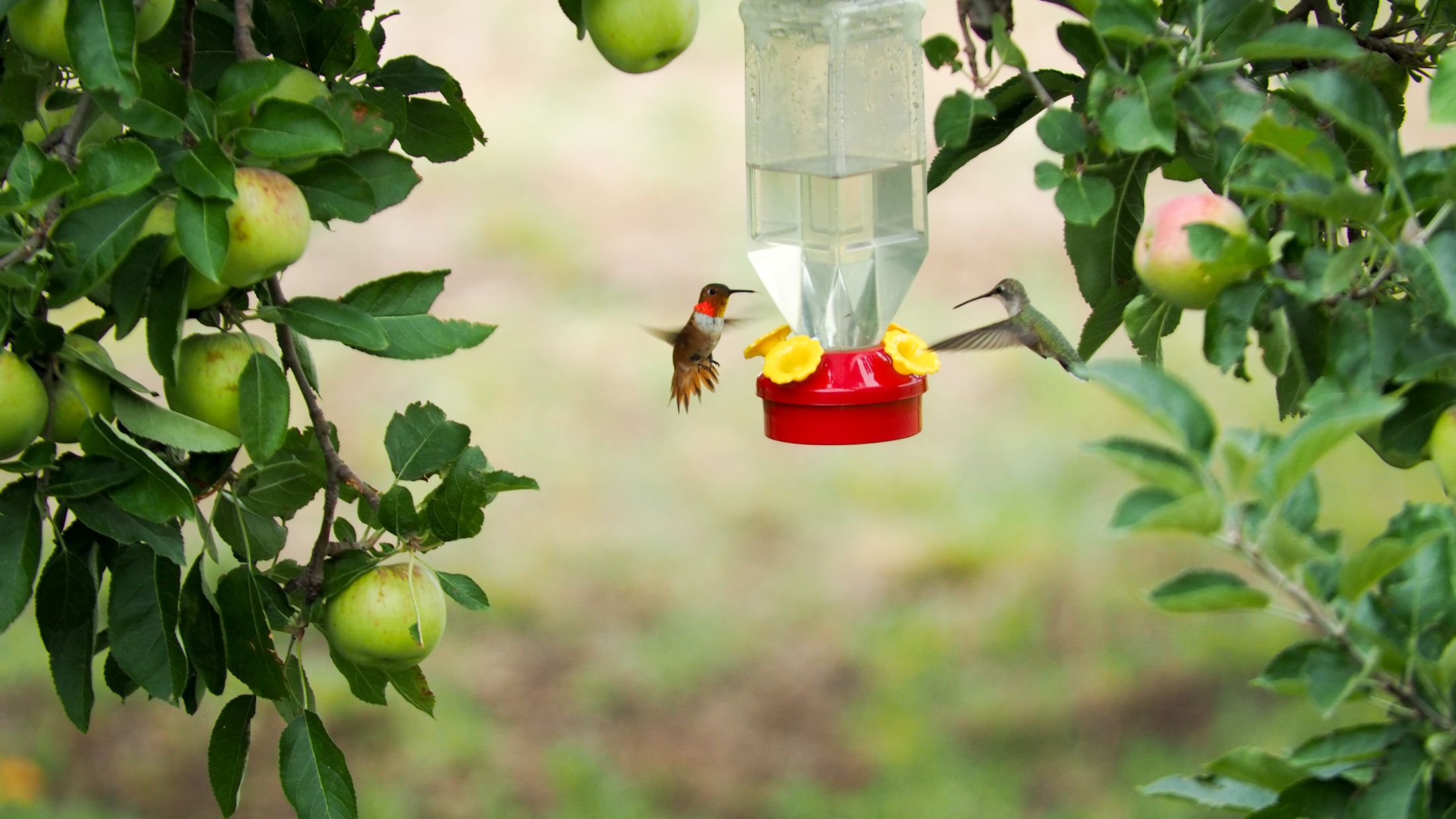
When trying to solve a bee or wasp problem, avoid tactics that may harm wildlife. Never spray insecticides near hummingbird feeders. These chemicals can harm beneficial pollinators and potentially affect birds as well. Likewise, avoid sticky traps, petroleum jelly, grease, or other substances that could trap insects or accidentally coat a hummingbird’s feathers.
Remember that bees and wasps are important parts of healthy ecosystems. The goal isn’t to get rid of them, but to simply encourage them to feed elsewhere.
Flock with Us on a Bird Walk this Summer
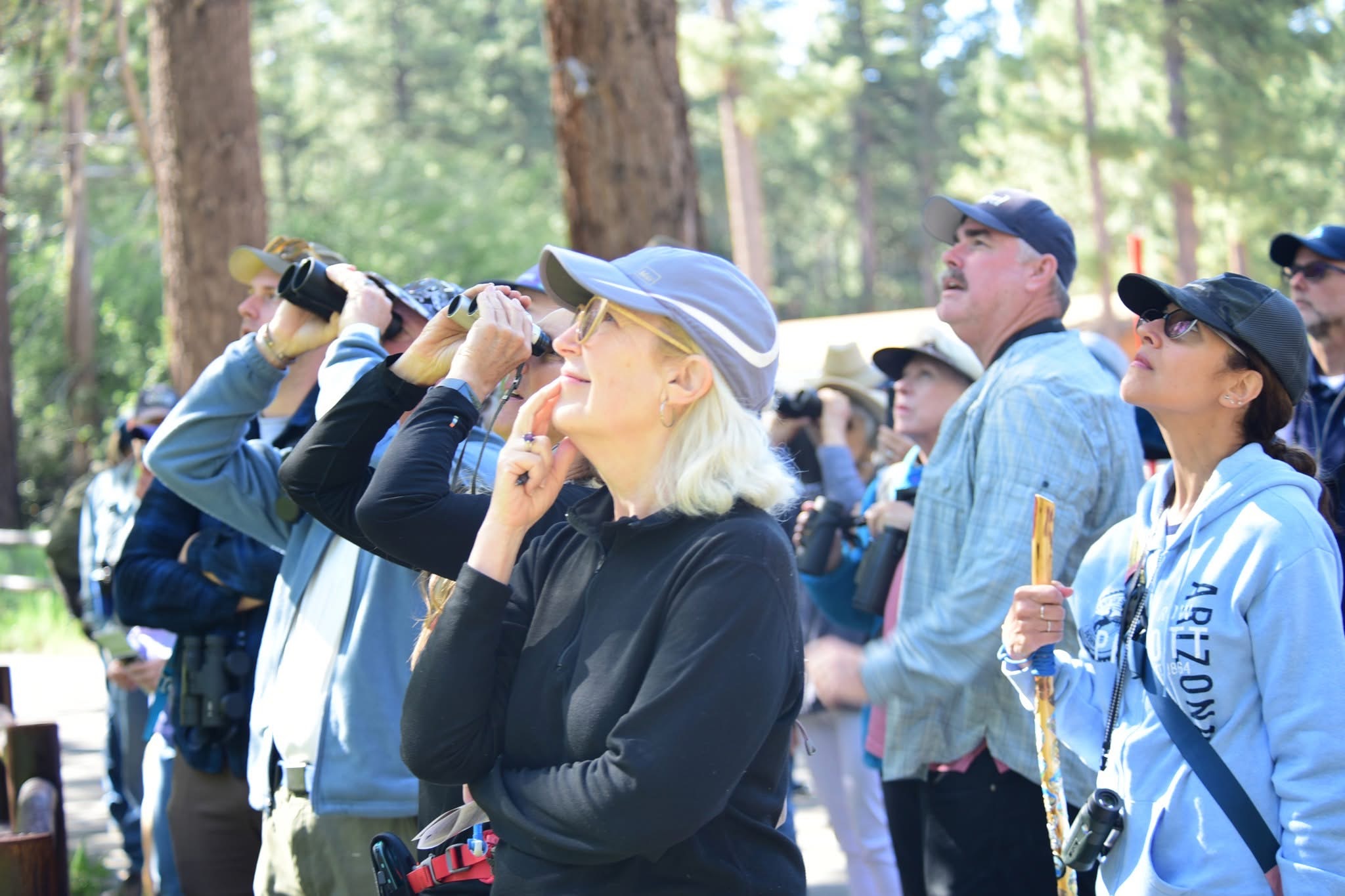
Our free, guided Bird Walks are back for 2026—check the Chirp calendar to register for the next one!