

With speeds up to 40 miles per hour, the Great Horned Owl swoops silently to catch its prey. Expert hunters and year-round residents of Big Bear Lake, Great Horned Owls can be found in our forests and canyons, especially around dawn or dusk. Let’s learn more about these fascinating birds of prey.
Do Great Horned Owls Have Horns?

Are those actual horns on the Great Horned Owl’s head? Though they look like horns, they are actually tufts of feathers. Nevertheless, the name stuck.
Basic Facts About Great Horned Owls
Great Horned Owls are one of the largest owl species in North America. And though they are most populous in the US and Canada, they are also residents of Central and South America. What’s fascinating about these magnificent birds, and what makes them able to live in a variety of places, is their adaptability. You’ll find the Great Horned Owl across forests and grasslands, as well as arid deserts and even more populated areas. If you’re lucky enough to hear one, typically sometime in the dark night hours, you can identify them by their signature “hoo hoo hooooo hoo hoo” vocal pattern (four short, distinct hoots with one longer hoot in the middle).
Have a listen to the Great Horned Owl’s hooting pattern:
Great Horned Owl Mating, Breeding, and Nesting
It’s now fall, breeding season for the Great Horned Owl. If you’re lucky, you might see a male owl try to woo a female in an elaborate courtship performance. Picture a lot of hooting, tail bobbing, preening, head jerks, and a swelling chest. Along with this display, the male may offer food to the female. If she responds to the male’s attention, their courtship is concluded, and a bond is formed. (And since Great Horned Owls are known to mate for life, this is no frivolous affair.)
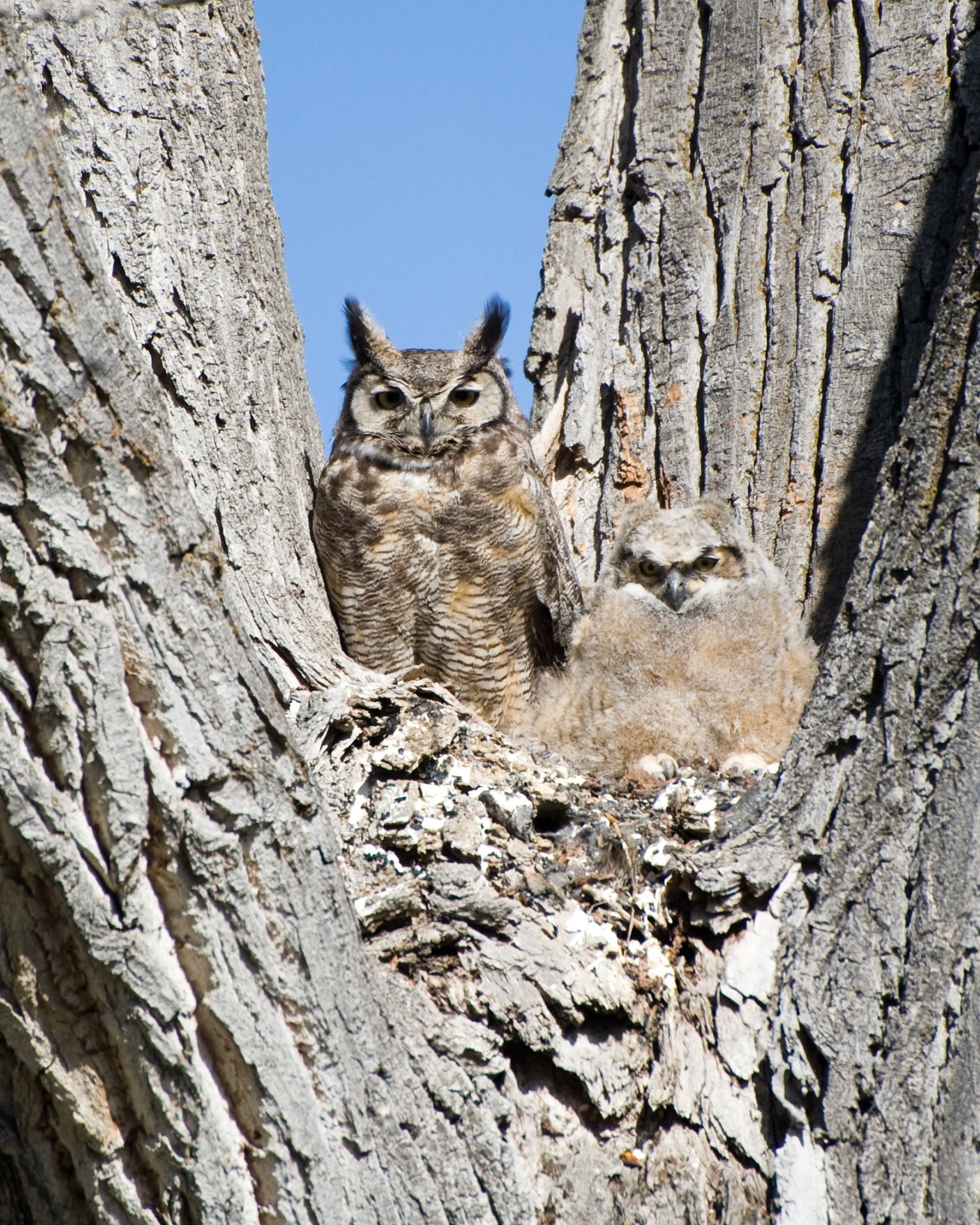
After mating, the bonded pair will look for a nesting site to raise their young. Now, Great Horned Owls, like most other owls, aren’t nest builders. Typically, the nesting spot they look for will be a tree cavity or other sheltered place. They’ll often use an abandoned crow or hawk nest. And in more populated areas, they’ll lay their eggs in barn rafters and other building nooks. When it comes to scouting for spaces to raise their young, these raptors are pretty flexible, though they prefer dense forests and out-of-reach, high places.
Nesting season doesn’t start until late winter, though, but by then the owl pair have done their reconnaissance and found a proper nesting site. Now it’s time to lay the eggs. The female owl typically lays between 1 and 5 eggs in a clutch, which she incubates for the next 30-35 days as her male partner flies back and forth to feed her with prey he’s caught from hunting.
How Great Horned Owls Hunt
Forceful. Masterful. Precise. All are used to describe the Great Horned Owl’s celebrated hunting style. Early naturalists called this owl the “winged tiger” because of its deadly prowess. Small animals, other birds (and even other owls) are all prey to this predator that mainly hunts in the dark night hours. In fact, so diverse is their palette that the Great Horned Owl is known to eat 500 species, everything from squirrels and skunks (even porcupines!) to reptiles and fish.
Picture the powerful hunter: the Great Horned Owl silhouetted on a tree branch, barely discernable in the moonlight. It may look like it’s relaxing, even sleeping. But it’s watching and listening for the smallest movement, the slightest sound. Once it finds its target, it swoops without a sound, surprising its prey with a sudden, deadly attack. With strong, sharp talons and hooked beaks, the owl grasps onto its meal with force while tearing it apart.
Great Horned Owl Conservation Efforts
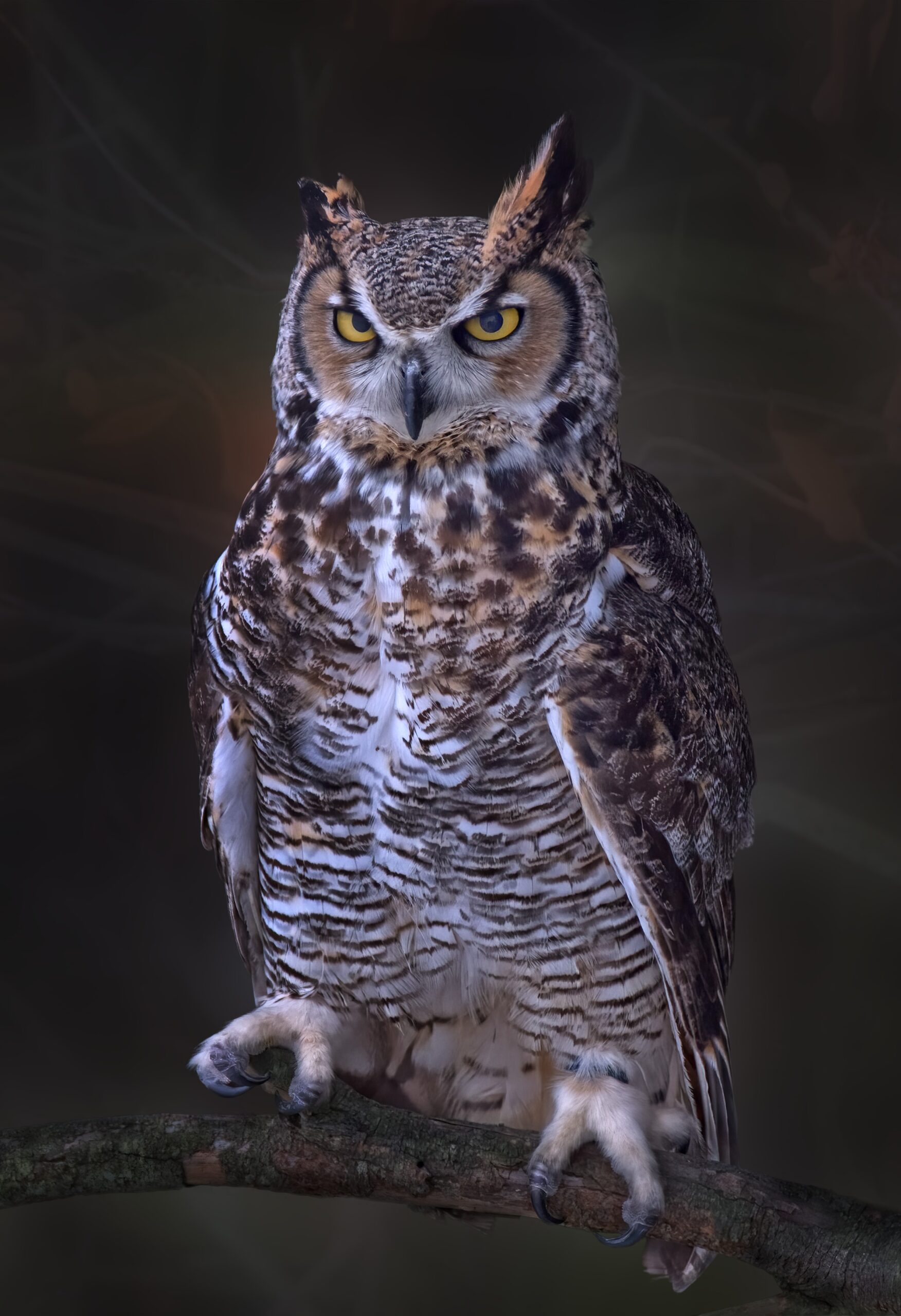
While not considered endangered or threatened, Great Horned Owls are showing signs of population decline. As such, conservation efforts for these mighty winged warriors focus on preventing habitat loss and educating the public on the effect of rodent poisoning on owls and other wildlife. To learn more about these efforts, and how to support them, visit organizations like The American Bird Conservancy and The Peregrine Fund.
Looking for more ways to get involved? Here’s a list of Chirp’s favorite bird conservation organizations.
Tips for Spotting Great Horned Owls in Big Bear Lake

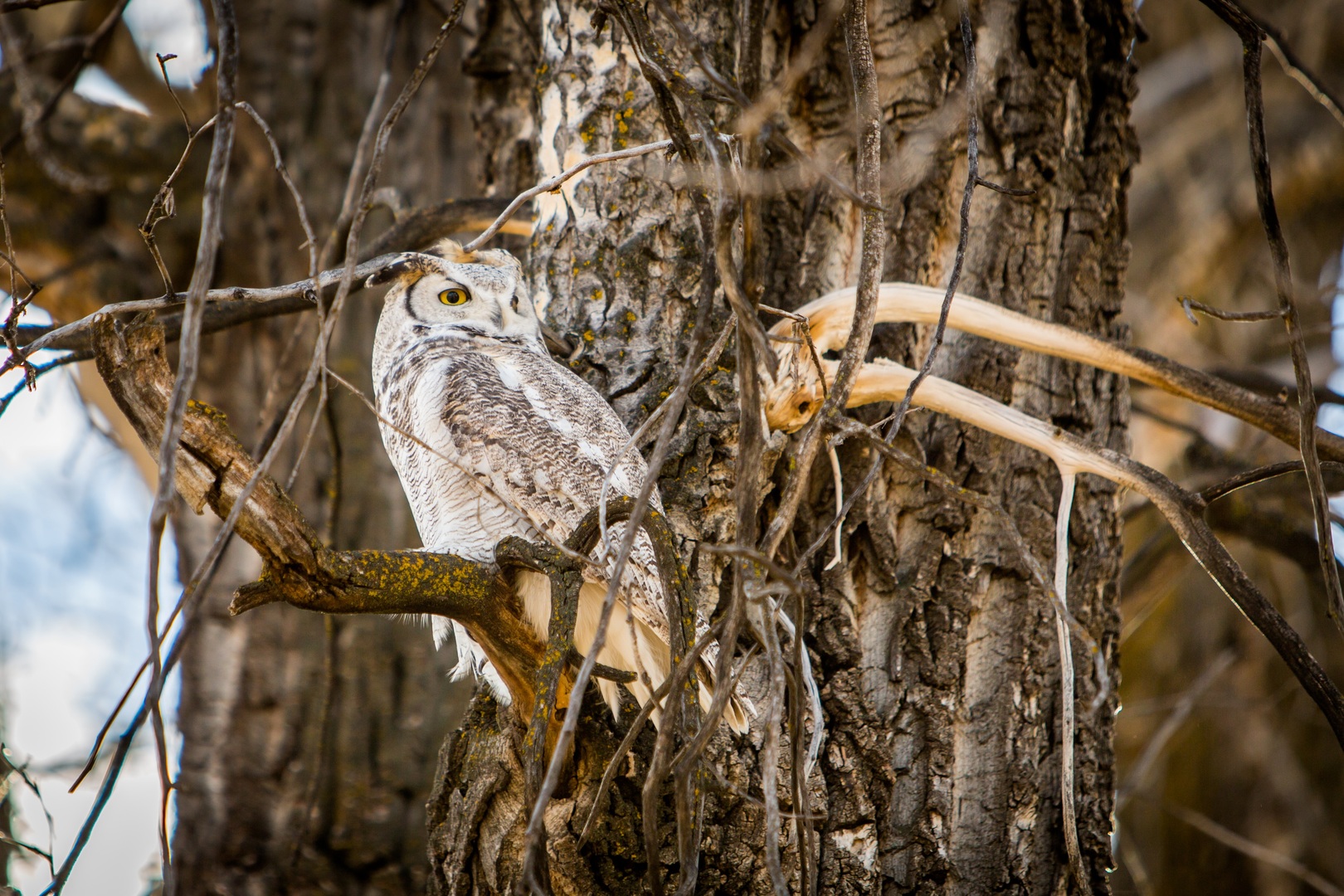
Since it’s their nesting season right now, Great Horned Owls can be seen around Big Bear Lake from late fall all the way into early spring. However, these silent predators are known for being hard to spot. You have a better chance of seeing them at dawn or dusk, when they’re most active. And, to the persistent birder, there are other signs to look for. For instance, Great Horned Owls will sometimes raid the roosts of crows and Blue Jays at night, so if you hear a mob of angry squawking birds, take a second look and you might spot an owl in their midst.
Another sight to look for is less pleasant, but effective: undigested pellets, or “whitewash.” This can look like other bird droppings, and show up as white, mostly liquid splatters on tree trunks and under trees. Since Great Horned Owls roost in trees, these feces are often a sign of their presence.
And if you don’t want to wait, you can see five Great Horned Owls at our local Big Bear Alpine Zoo!
The Wonder of Birds Delivered to Your Inbox!
Love learning about wild birds? Sign up for Chirp’s free newsletters to get monthly bird inspo! (Plus, you’ll be the first to know about our sales, special promos, and local events.)