
Have you ever paused mid-walk to watch birds circling high overhead? Or wondered why some birds scratch the ground? Bird behaviors are as fascinating as they are varied— sometimes birds are trying to communicate; other times, they are simply trying to survive. And sometimes, scientists have no explanation other than play. One thing’s for sure: birds are complex creatures with vast communication skills. Here’s what they might be trying to say.
Bird Behavior #1: Flying in a Circle
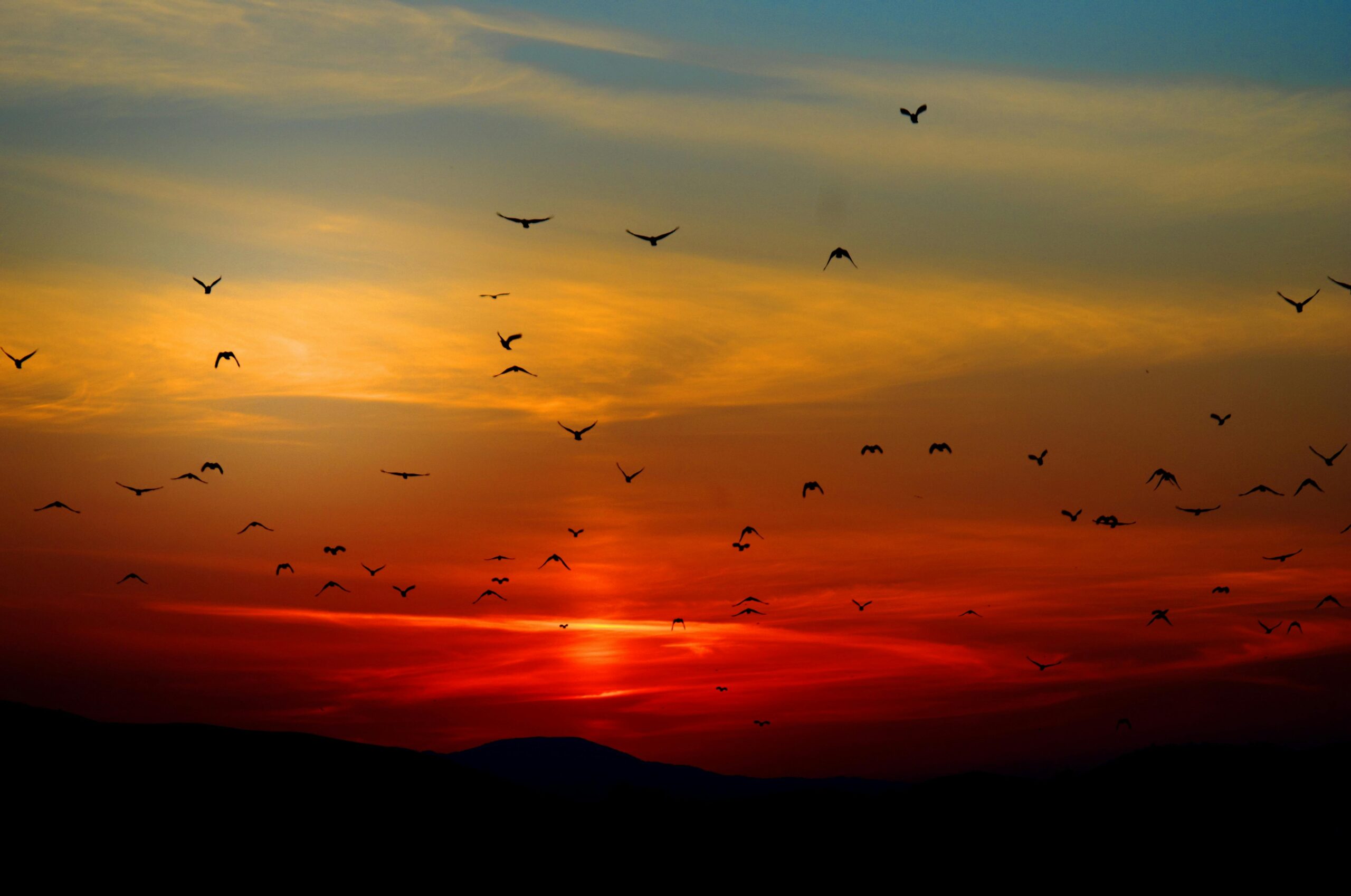
When you see one or more birds circling the sky, there’s a good reason. Sometimes, a bird is searching for prey or honing in on it. Other times, birds like eagles and hawks conserve energy by riding thermal updrafts, gliding effortlessly through the air without flapping their wings. (Think of it as bodyboarding, but with air instead of waves).
Do birds circle in the sky before a storm? The answer is…maybe. Birds are highly sensitive to changes in weather and air pressure, and sometimes those shifts send them spiraling through the sky in search of a safe spot to ride out the storm.
Other times, birds do the opposite—remaining still and silent as they shelter nearby before bad weather hits. In regions prone to hurricanes and severe storms, a sky suddenly empty of wings and birdsong can be the most telling warning of all.
Bird Behavior #2: Scratching the Ground
We’ve known that chickens scratch, but it turns out other wild birds do too. Most commonly, they’re foraging for food, digging for insects and other morsels. Locally, you’ll likely see California Towhees and Spotted Towhees scratching through pile of dirt or leaves, rummaging for food. Some species, like the Northern Lapwing and Olive Thrush, even stamp their feet to flush worms from the soil.
Other birds—like certain sparrows, robins, wrens, and thrashers—take a “dust bath,” kicking up dirt to clean their feathers of excess oils and parasites, while also helping regulate body temperature in hot weather.
Interestingly, birds like quails and meadowlarks will scratch the ground to create a small space to lay their eggs, often lining it with grass and other debris. Some even create shallow nests in rocky areas, tall grass, or weeds to camouflage them from predators.
Bird Behavior #3: Swooping and Diving
The fastest bird dive is clocked at 240 mph, with the Peregrine Falcon holding the record—making it the fastest animal on Earth. Its controlled dive is swifter than a Formula 1 car or small airplane. Other birds, including kingfishers, terns, pelicans, swallows, and swifts, also dive to catch prey.
If you’ve ever inadvertently ventured too close to a nest, you’re familiar with swooping. A bird will “swoop,” or dive bomb, potential predators to defend its nest. Crows are notorious for this behavior, but terns, swallows, mockingbirds, jays, songbirds, and chickadees also display this behavior.
Bird courtship and mating can also involve swooping and diving. A male Swainson’s Hawk might swirl the sky before ending in a dramatic dive while wooing a female. Male hummingbirds sometimes fly as high as 100 feet before performing a breathtaking dive. Raptors like eagles and harriers also dive as part of their mating rituals.
Why else do birds swoop and dive? To steal food, practice flying (for juvenile birds), react to weather fluctuations—or perhaps just for the sheer joy of it.
Bird Behavior #4: Wing Flashing and Tail Fanning
A “wing flash” is when a bird quickly opens and closes its wings, revealing bright colors or patches to startle its audience—whether predator, prey, or rival.
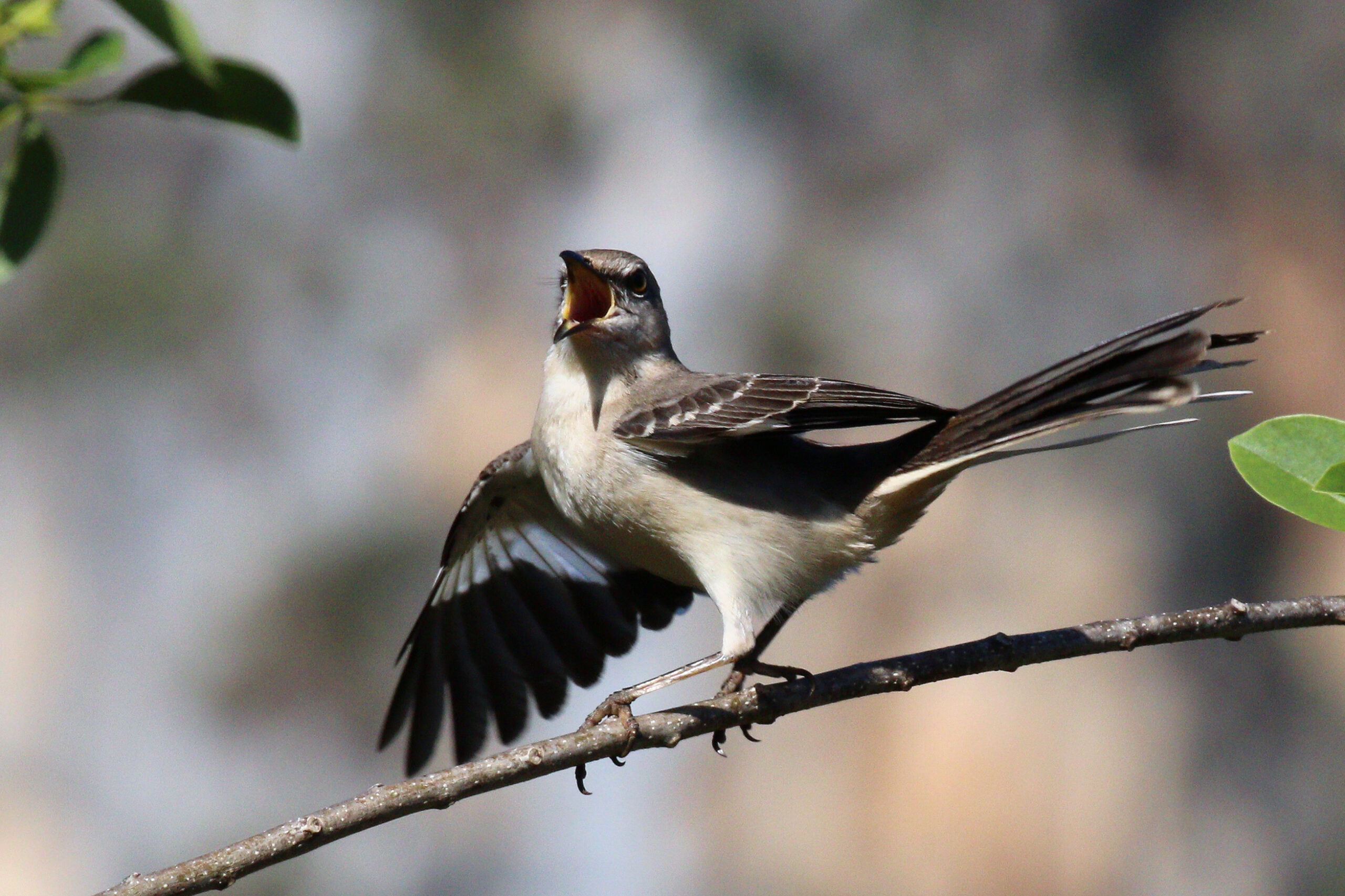
The Northern Mockingbird is perhaps the best-known example of wing flashing, with streaks of white sending out a warning on its outstretched wings. Other wild birds also wing flash to flush out prey, deter predators, or signal territory.
Tail fanning has multiple purposes, from steering and braking during flight to warning another suitor off their love interest. Male birds like wild turkeys and lyrebirds will fan their tails (sometimes for hours!) to advertise their stamina to female birds.
Though tail fanning isn’t always this innocuous; sometimes it’s used as warning to predators (“Back off!”) or territorially (“Get off my turf!”) Other times, it’s simply a way for a bird to maintain balance while perching.
Bird Behavior #5: Darting and Mobbing
Darting and mobbing often work together as strategies for birds to ward off threats. A bird will dart at its target, swooping or approaching quickly in an “in and out” pattern, to chase it away. Mobbing occurs when one or more birds aggressively fly at a predator, sometimes also dive bombing, calling alarms, and darting simultaneously.
These behaviors primarily protect nesting sites, territories, and food sources. Small birds, often defending young, join forces against larger predators like hawks and owls. There is safety in numbers, and mobbing is usually a cooperative effort by several smaller birds against a single larger threat.
Love to Learn About Birds? We Deliver!

Sign up for our free monthly newsletter to get more fascinating bird facts delivered straight to your inbox! Why stop there? If you’re a Big Bear resident, sign up for our customizable seed subscription service to get our proprietary Big Bear seed blend dropped at your door at a discount.
Photo credit: Northern Mockingbird photo courtesy of Charles J. Sharp.