

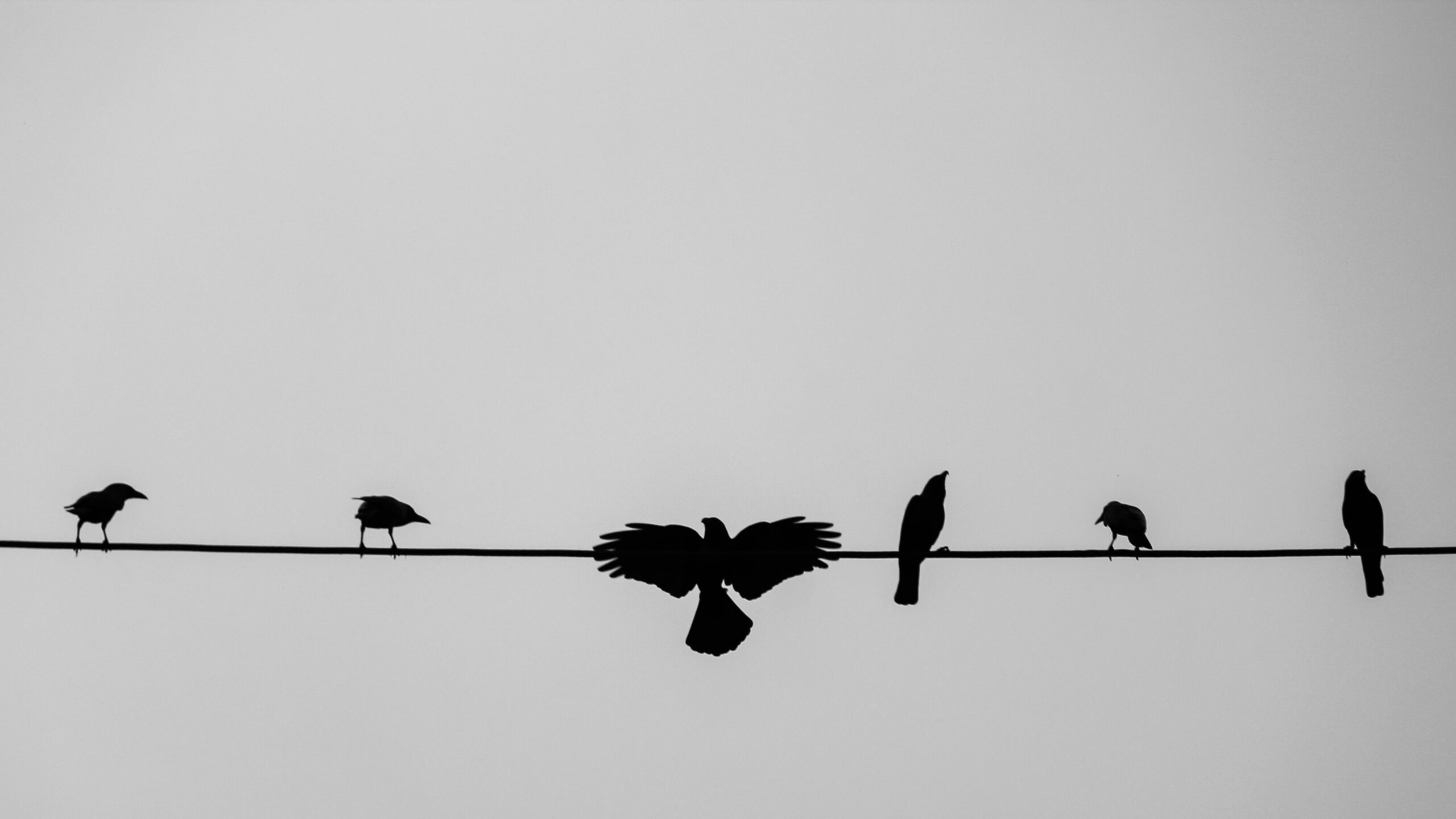
It’s like a scene from The Birds: you look out your window to see a large group of crows perched in a tree or lined up on a power line. Why so many crows all of a sudden? And why are they all congregating in one place? No, it’s not a bad omen; there are several reasons this might be happening.
Those Who Flock Together

Crows are a highly intelligent, highly social bird species. When they are together in large groups, they are learning from each other about their environment, nearby predators, and where to get the choicest food in the area. Along with sharing information, they are also looking for mates in their group, and learning how to court, nest, and care for offspring from the more seasoned birds. Predators don’t stand a chance against the vast number of birds, who will sound the alarm long before one can get too close. And why else do crows like to get together with their extended large family? The same reason we humans do: for some good conversation.
Tis the Season for a Good Roost

The American Crow is a common, year-round sight in Southern California. However, the fall and winter months are busy times for these canny corvids. During this time, you’re likely to see a larger group of crows gathered together at any given time because it’s roosting time. Crows gather in communal roosts, which can number anywhere from dozens to thousands of birds. The reason they roost in larger numbers is simple: there is safety in numbers, and a large group means more defense against predators. Crows are also famously social birds, and roosting together is a bonding experience. Large crow roosts also function as heat exchangers, as the birds snuggle up to keep each other warm in cold weather.
There’s a Steady Food Source Nearby

If there’s food to be found, crows will find it. If you’ve ever had your trash can picked through or your bird feeder swarmed, you know this already. So if you’re suddenly seeing a large group of crows around, it could be that there’s abundant food nearby. Now, this may not be your neighbor’s trash can; it could be near a field they like to forage, or even a store parking lot with lots of discarded food trash. Crows aren’t picky eaters, and when it comes to setting up home near a food source, it could be natural or manmade—they don’t care.
Is it a Crow Funeral?
You may see a crowd of crows gathered around a dead crow in what is termed a “crow funeral.” You might see what you expect to see at a human funeral: loud cries, heads bowed in what appears to be grief. Crows sometimes even try to bring their dead objects, almost as an offering to the dead, as they do in some human cultures. However, we like to humanize their behavior, crows likely aren’t mourning their dead during these odd exchanges. Instead, scientists believe that they are actually “investigating” the death, as it were, to learn more about potential dangers, so that they don’t meet the same fate.
Mobbing Predators for Safety
Ever wonder what all the ruckus is all about? You hear a bunch of squawks and see a flurry of black feathers in the sky. More than likely, it’s a crowd of crows “mobbing” a predator bird, like a hawk, eagle, or owl. Crows are defending their turf in numbers, cawing loudly and aggressively, and chasing the bird threat until it leaves the area. Mobbing is a common bird behavior, where smaller birds will team up to drive away a larger bird. Jays, chickadees, and swallows are also known to mob birds they see as bullies.
More of Your Crow Questions Answered

Are crows the smartest birds?
Yes. Crows, like ravens, are corvids, which is considered the most intelligent bird family.
Can crows remember faces?
Not only do they remember and differentiate between human faces, but they can keep this knowledge for years and even pass it on to their offspring.
Is a group of crows really called a “murder”?
While the term “murder of crows” is a correct way to signify a group of crows, its roots lay more in folklore than modern science. Therefore, scientists generally use the terms “group” or “flock.”
Can humans become friends with crows?
There have been instances where birds and humans have become friends, of sorts. And this is particularly true of crows, who are highly intelligent and social creatures. These interactions typically involve the human offering food or other gifts to crows and slowly building their trust.
Learn More About Your Favorite Birds
- Wonderful Woodpeckers: How to Attract Them to Your Yard
- The Rare Birds of Big Bear Lake
- 10 Amazing Facts About Bald Eagles
- Why Doves are the Symbol of Peace and Other Dove Facts
- All About Owls
- 8 Fascinating Facts about Rad Raptors
- 12 Bird Statistics That’ll Get You Squawking
- 13 Surprising and Spooky Raven Facts